What determines lead times for precision turned parts?
Why a turned part can be produced in seconds yet still take weeks to deliver – and how feasibility, materials, capacity planning and delivery reliability come into play.
A precision turned part may take only seconds to manufacture, yet have a lead time of several weeks. Why? Machining time is often just a small part of the overall order lead time. Material procurement, technical feasibility assessments, machine scheduling, set-up, inspection and external processing stages all need to be coordinated.
An important distinction: quotation and technical clarification generally take place before an order is placed. The delivery lead time itself begins at the agreed order start date and ends upon delivery. Both stages matter when considering the overall procurement timeline.
The stages that take time
1. Enquiry, technical clarification and feasibility assessment
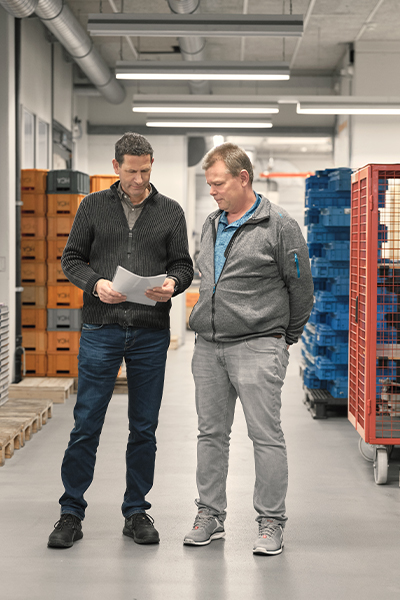
Before a quotation can be prepared, the manufacturer needs to establish whether the part can be produced reliably and economically using the available manufacturing processes. This requires a technical drawing, material and quantity specifications, and details of any quality, documentation or industry-specific requirements.
The feasibility assessment considers factors including geometry, tolerances, access for machining, inspectability and measurability, required downstream processes, and the suitability of machines and tooling. Complex or new parts may call for further questions or discussions with the design team. The aim is to establish a robust manufacturing process, not simply to issue a quotation quickly.
2. Raw material procurement
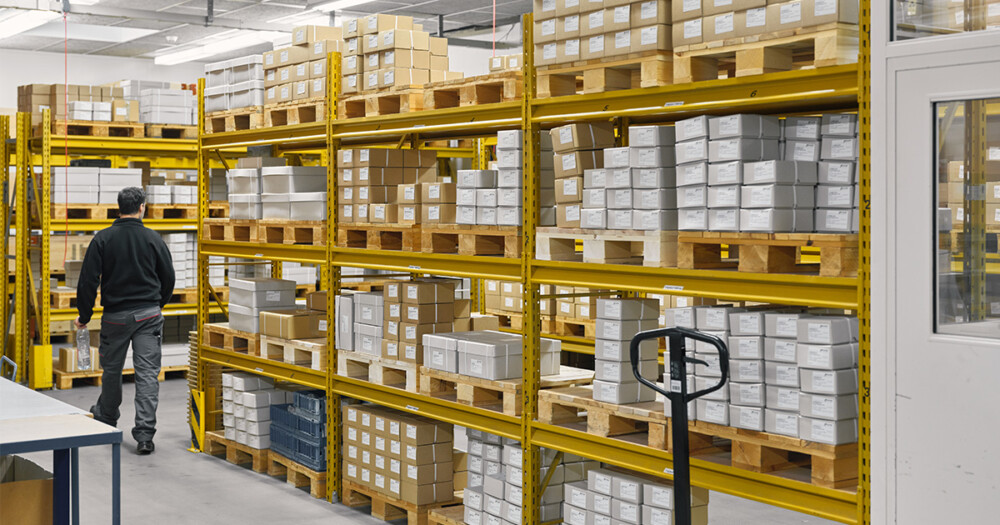
If the required raw material is available in the right dimensions and quantity, production can be prepared sooner. Otherwise, procurement lead times depend on the material, its supply form, the quantity required and market conditions. Specialist materials or particular material certification requirements may involve longer lead times.
Coordinated material planning helps identify potential shortages early and establish realistic delivery dates.
Insights from practice: Supply Chain Risks
3. Production planning and machine capacity
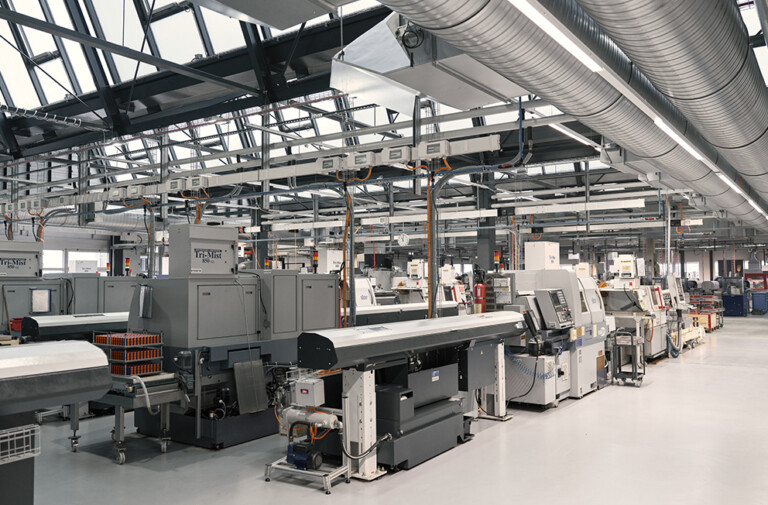
A short machining cycle does not mean that the right machine is immediately available. In series production, equipment may be committed to repeat orders for extended periods. New orders must be scheduled around existing production batches, tooling availability and planned changeovers.
A versatile machine park may offer alternative manufacturing options. However, moving a part to another machine only makes sense if its required characteristics and process reliability can also be assured on that equipment.
4. Set-up and production start-up
Before series production begins, tools are fitted, process parameters are set, and initial parts are manufactured and inspected. The time required depends on the part geometry, machine and existing process experience. For repeat parts, documented settings and proven tooling make preparation easier, although they do not eliminate set-up work altogether.
5. Initial samples and approvals for new parts
New parts may require additional stages, such as initial sample production, inspection reports, process evidence and customer approval before series production begins. The scope and sequence depend on the agreed requirements, particularly in sectors such as automotive and medical technology. Time for the customer to review and approve the samples must also be allowed for.
6. Series production, quality inspection and documentation
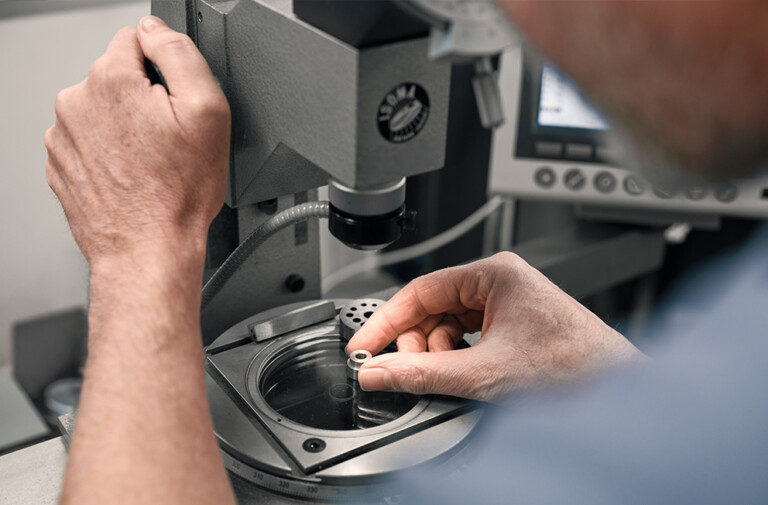
During production, characteristics are monitored in accordance with the agreed inspection plan. Further checks and the required documentation also form part of the overall lead time. Where quality or traceability requirements are particularly demanding, additional inspection and approval stages may be necessary.
7. External downstream processes and dispatch
Where processes such as electroplating, electropolishing or heat treatment are carried out externally, the capacity of partner companies, transport, any intermediate inspections and return deliveries must all be factored into the schedule. Packaging and logistics requirements also affect the final dispatch date.
What can shorten lead times or make them more predictable?
– Early technical discussions: Complete drawings and clear requirements allow feasibility assessments and quotations to progress efficiently.
– Established, approved processes: For repeat orders, tooling, process parameters and inspection requirements are often already defined.
– Material planning: Demand forecasts support timely procurement of suitable materials.
– Framework agreements and delivery schedules: Where agreed, recurring demand allows materials, production capacity and call-off deliveries to be planned in advance.
– Open communication: Changes to dates or quantities identified early are easier to assess and manage together.
Why the shortest lead time is not always the most economical
A small urgent order may require the same machine set-up as a larger production run. Last-minute rescheduling or additional transport can increase costs. Economical batch sizes and coordinated call-off arrangements can therefore benefit both manufacturing costs and security of supply.
For many industrial customers, delivery reliability matters just as much as a reasonable lead time. A delivery date that is consistently met often provides greater planning certainty than a particularly short but uncertain promise
Conclusion: It is not just the lead time that matters, it is how reliably it can be met.
Lead times for precision turned parts reflect a combination of technical clarification, feasibility assessment, material availability, machine capacity, set-up, production, inspection and, where necessary, external downstream processes. A blanket estimate in weeks would therefore be of limited value.
The earlier requirements and demand are coordinated, the easier it is to plan realistic delivery dates. The objective is not simply the shortest possible lead time, but an economical and dependable supply arrangement.
If you would like to discuss lead times, feasibility or a suitable call-off schedule for your part, please get in touch.
Frequently Asked Questions (FAQ)
What is assessed during a feasibility review?
Key considerations include geometry, tolerances, material, suitable manufacturing processes, measurability and any necessary downstream processes. The review establishes whether the part can be produced reliably and economically, and identifies any points that need clarifying before a quotation is issued.
What is a realistic lead time for a precision turned part from Häni?
A reliable estimate can only be given once the drawing, technical feasibility, material availability and production capacity have been reviewed. Preparation is often more straightforward for repeat parts that have already been approved.
Why is a repeat order often quicker than a new part?
For repeat orders, tooling and processes have often already been defined and approved. New parts may require additional time for feasibility assessments, tooling procurement, initial samples and approvals.
Can a delivery date be confirmed as binding?
Once the technical requirements, material availability and production capacity have been clarified, a firm delivery date can be agreed. Meeting that date remains subject to the agreed conditions and any unforeseen events.
How can framework agreements affect lead times?
Reliable demand forecasts and agreed call-off schedules allow materials and capacity to be planned ahead. Under suitable conditions, individual call-off orders can therefore be fulfilled at shorter notice.
Who are Häni + Co. AG?
Häni + Co. AG is a Swiss family business based in Arch in the canton of Berne. Founded in 1939, the company has manufactured custom precision turned parts for demanding industrial applications for over 80 years. Its capabilities encompass conventional and CNC-controlled single-spindle automatics, multi-spindle machines and rotary transfer machines, together with in-house finishing operations including centreless grinding, honing, vibratory finishing and roller burnishing. Häni + Co. AG holds certifications to ISO 9001, ISO 14001, ISO 13485 and IATF 16949, and supplies customers in building services, medical technology, interconnect technology, sensor technology, robotics and automotive. Diameter range: Ø 1 to 65 mm.
Which sectors does Häni + Co. AG supply?
Building services, medical technology, interconnect technology, sensor technology, robotics, fluid technology and automotive. Typical components include shafts, axles, bushings, pinions, valve spindles, contact pins and connector elements. Swiss Precision since 1939.