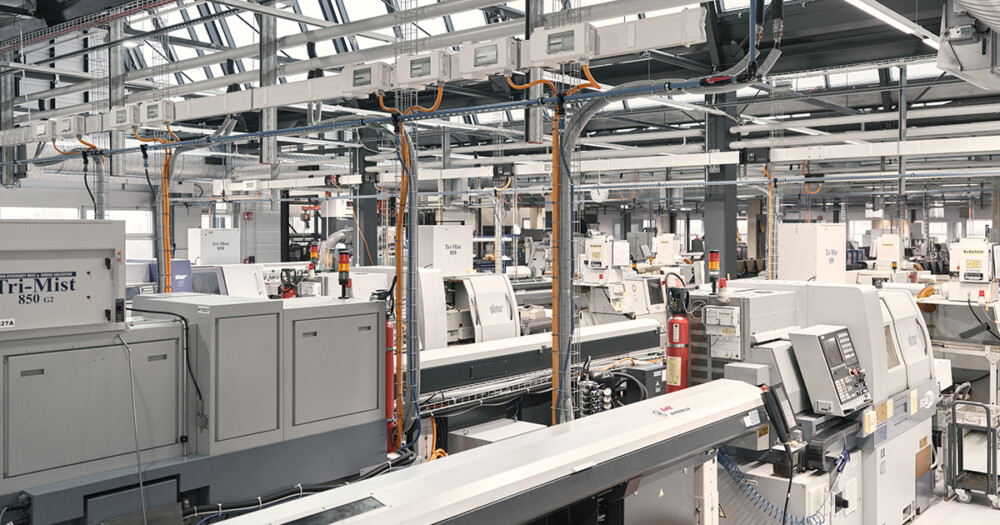
Why Choose Swiss Manufacturing for Precision-Turned Components?
Choosing the right manufacturing location is a question of total cost. With higher labour, energy and infrastructure costs, Swiss manufacturing is often not the cheapest option on unit price alone. However, shorter distances, faster communication, stable processes and robust quality assurance can reduce costs and risks elsewhere.
The unit price tells you what a component costs to buy. A total-cost assessment also takes account of supplier qualification, quality assurance, handling complaints, stockholding, transport, communication and response times.
Where Swiss Manufacturing Can Make a Difference
Responding to problems and design changes
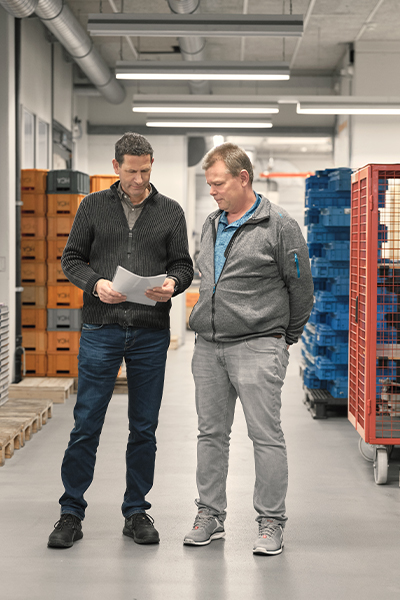
Technical queries, design changes or non-conformities involving precision-turned components can require swift decisions. Short communication channels, no time-zone differences and geographical proximity make it easier for purchasing, engineering, quality and production teams to work directly together.
With complex components or last-minute changes in particular, the speed at which technical questions are resolved and corrective action is taken may matter more commercially than a small difference in unit price.
On-time delivery and reliable planning
Reliable delivery is essential for customers running series production. Late deliveries can disrupt production schedules, require additional safety stock or, in the worst case, bring production to a halt. Dependable suppliers make realistic delivery commitments, plan production ahead and consistently meet agreed dates and quantities.
For customers in Switzerland and elsewhere in Europe, short transport routes and close coordination can offer further advantages, particularly when call-off quantities fluctuate. Nevertheless, on-time delivery is first and foremost a measurable attribute of the individual manufacturing partner – not an automatic benefit of its location.
Quality assurance and process control
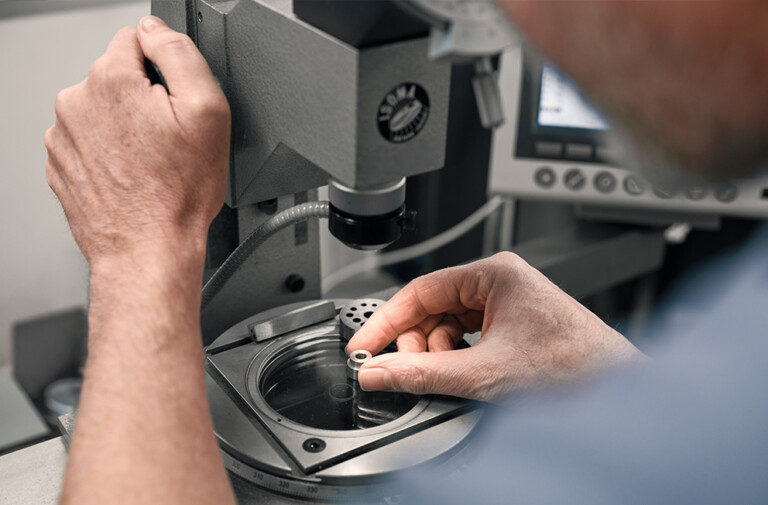
High quality standards cannot be attributed to manufacturing location alone. What matters is well-controlled processes, skilled employees and a quality management system that is consistently applied. Switzerland’s precision engineering industry has a long tradition of producing demanding components and benefits from a specialised industrial ecosystem. This can be advantageous for complex geometries, tight tolerances and stringent documentation requirements.
Certifications such as ISO 9001, ISO 13485 and IATF 16949 provide internationally comparable frameworks, regardless of where production takes place. The decisive factor is how consistently these requirements are applied on the shop floor.
Technical expertise and vocational training
Switzerland’s dual vocational education system and continuing professional development help sustain a specialised industrial skills base. Producing demanding precision-turned components calls for expertise in process design, machine set-up and continuous production monitoring. These capabilities are not unique to Switzerland, but they can strengthen collaboration with a manufacturing partner that has them in place.
Short distances and well-managed supply chains
For customers in Switzerland and across Europe, a Swiss manufacturing partner can offer short transport routes and predictable delivery arrangements. What matters, however, is not geographical distance alone but the organisation of the entire supply chain – from sourcing raw materials through manufacturing and any outsourced processing to final delivery.
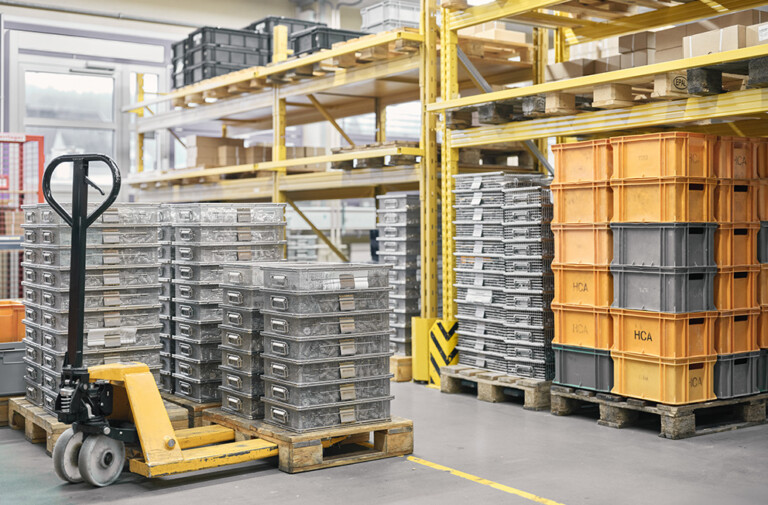
A coordinated supply arrangement, with appropriate stock levels and flexible call-off options, can improve security of supply. Proximity also makes it easier to coordinate changes to delivery schedules or resolve problems.
Transparency in materials and processes
In precision turning, material quality and availability affect process stability and ultimately the quality of the finished component. A manufacturing partner with transparent sourcing arrangements and documented material traceability provides additional reassurance.
The key question is not simply where a material originates, but whether its origin, quality and batch can be traced and whether a reliable supply can be maintained for the planned production run.
Swiss origin as an added benefit
For certain applications, a component’s Swiss origin can be an additional selling point, particularly where customers value regional sourcing, documented provenance or a Swiss value chain.
Whether this translates into a commercial advantage depends on the product, the end market and customer requirements. The Swiss origin of a single component does not, in itself, entitle the finished product to carry a “Swiss Made” designation.
Automation and productivity as competitive advantages
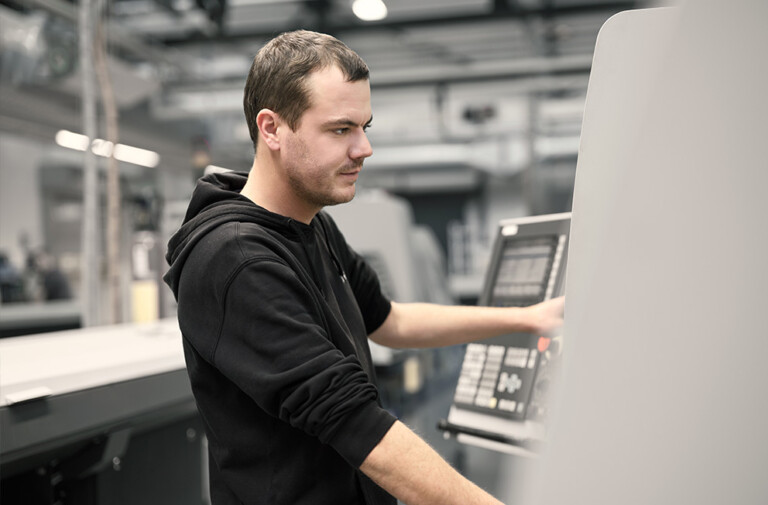
High Swiss labour costs do not necessarily mean high unit costs. In automated precision turning, machine productivity, cycle times, set-up effort and process stability all have a major bearing on cost-effectiveness alongside labour costs. For medium- and high-volume production, multi-spindle automatic lathes and rotary transfer machines can substantially reduce labour input per component. The key is to select the right manufacturing technology for the geometry, tolerances and annual volume.
A simplified cost example
A customer needs 100,000 turned components a year. An offer with a unit price five Swiss centimes lower appears to save CHF 5,000 annually. Longer transport times, additional safety stock or greater coordination effort could absorb some of that saving. This is not an argument against the lower-priced supplier; it simply illustrates why a fair comparison needs to account for all relevant costs and risks.
When unit price matters more
Manufacturing in Switzerland is not automatically the most economical solution for every component.
For simple components with undemanding geometries, very high volumes, stable specifications and long planning horizons, a lower-cost manufacturing location may make sense. This is particularly true where rapid response is less important and the comparison includes all relevant costs.
Conversely, even large production runs can be competitive in Switzerland. With high levels of automation and productive manufacturing technologies, labour accounts for a smaller share of the cost per component. The more demanding the component – and the greater the requirements for quality, flexibility and security of supply – the more important a total-cost assessment becomes.
Conclusion: The best overall value matters more than the lowest unit price.
Swiss manufacturing may not offer the lowest unit price. What matters is the cost and risk incurred throughout the sourcing process and the product lifecycle.
Quality assurance, complaints, communication, transport, stock levels, delivery reliability, response times and security of supply should therefore be assessed alongside the price of the individual component.
The real question is not: Is Swiss manufacturing cheaper?
It is: Which manufacturing solution offers the best balance of quality, cost, flexibility and risk for this component?
If you would like to discuss these considerations for your component, please get in touch.
Further reading:
Why Series Stability in Precision Turned Parts Matters More Than Unit Price
Frequently Asked Questions (FAQ)
Is Swiss manufacturing always more expensive for precision-turned components?
On unit price alone, Swiss manufacturing can be more expensive because of higher labour, energy and infrastructure costs. A sound commercial comparison should also consider quality assurance, transport, stockholding, communication, response times and potential downstream costs.
When is Swiss manufacturing particularly worthwhile?
Short distances and close collaboration with a manufacturing partner can be particularly valuable for technically demanding precision-turned components with tight tolerances, stringent quality and documentation requirements, short call-off cycles or frequent changes.
Can Swiss manufacturing be competitive for high-volume production?
Yes. Beyond labour costs, the choice of manufacturing technology, level of automation, cycle time, set-up effort and process stability all influence commercial viability. Highly automated processes can keep the labour cost per component relatively low. The economics should therefore be assessed for the specific component and planned annual volume.
Why is traceability important for precision-turned components?
For demanding applications, particularly in regulated industries, it must be possible to establish which material was used and under what conditions a component was manufactured and inspected. Documented processes and material traceability provide the necessary transparency.
Who are Häni + Co. AG?
Häni + Co. AG is a Swiss family business based in Arch in the canton of Berne. Founded in 1939, the company has manufactured custom precision turned parts for demanding industrial applications for over 80 years. Its capabilities encompass conventional and CNC-controlled single-spindle automatics, multi-spindle machines and rotary transfer machines, together with in-house finishing operations including centreless grinding, honing, vibratory finishing and roller burnishing. Häni + Co. AG holds certifications to ISO 9001, ISO 14001, ISO 13485 and IATF 16949, and supplies customers in building services, medical technology, interconnect technology, sensor technology, robotics and automotive. Diameter range: Ø 1 to 65 mm.
Which sectors does Häni + Co. AG supply?
Building services, medical technology, interconnect technology, sensor technology, robotics, fluid technology and automotive. Typical components include shafts, axles, bushings, pinions, valve spindles, contact pins and connector elements. Swiss Precision since 1939.