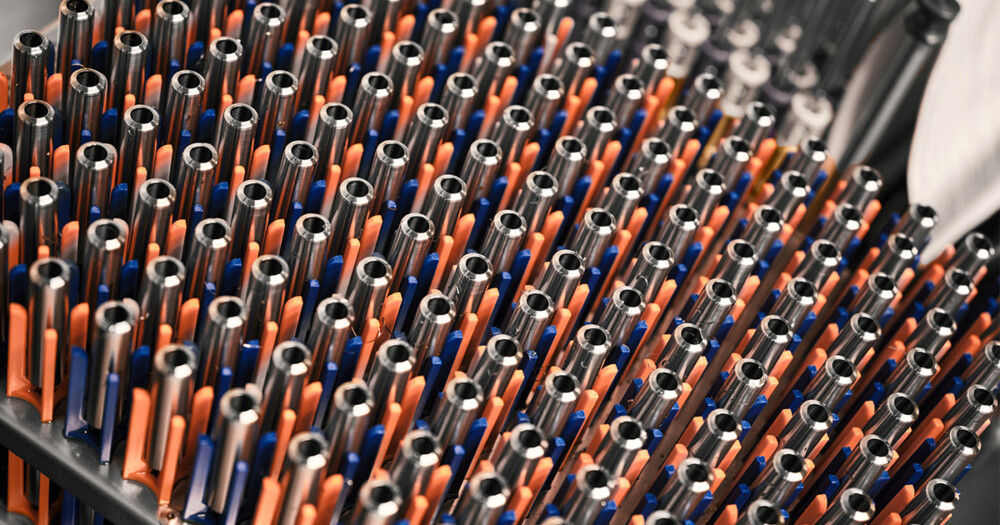
Why do seemingly identical precision turned parts vary in price?
Two quotations based on the same drawing can differ considerably. This article explains how manufacturing methods, technical feasibility, batch size, material, tolerances and process reliability affect pricing — and why unit price alone does not tell the whole story.
When sourcing a precision turned part, buyers sometimes receive quite different prices. These differences reflect more than the way suppliers calculate their costs: machine configurations, process design, batch sizes and quality requirements all play a part. The same drawing does not necessarily mean the same manufacturing effort.
Most price differences can be explained. This article looks at the main factors behind them.
The main cost drivers explained
1. Manufacturing method
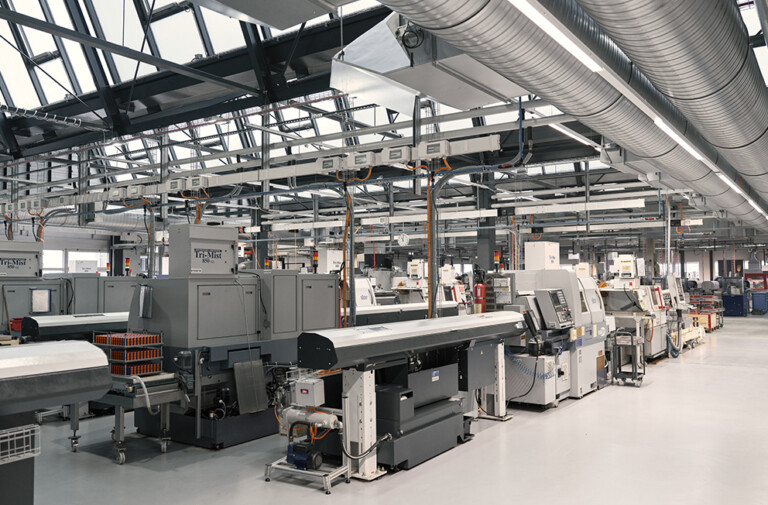
The choice of manufacturing method can have a significant impact on unit price. Producing a component on a single-spindle CNC lathe involves different set-up and machining costs from making the same part on a multi-spindle machine or rotary transfer machine. The most cost-effective option depends primarily on the component’s geometry, tolerances and batch size.
This is where a versatile machine fleet offers a real advantage. Häni has a range of turning technologies, allowing us to match the manufacturing approach to the component’s requirements and the planned production volume. The key is to choose a process that delivers the required quality cost-effectively and consistently.
2. Technical feasibility assessment
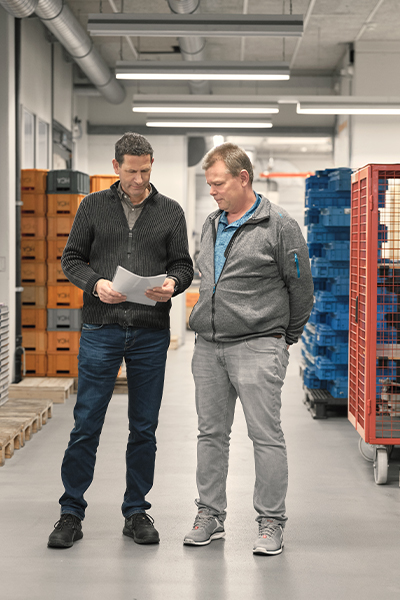
A reliable cost estimate starts with a technical feasibility assessment. This involves reviewing the drawing, geometry, tolerances, material, and proposed machining and inspection methods to establish whether the part can be manufactured as specified. Potential challenges can then be identified early and a cost-effective, reliable manufacturing process developed. This provides the basis for realistic pricing and dependable quotations.
3. Batch size and set-up costs
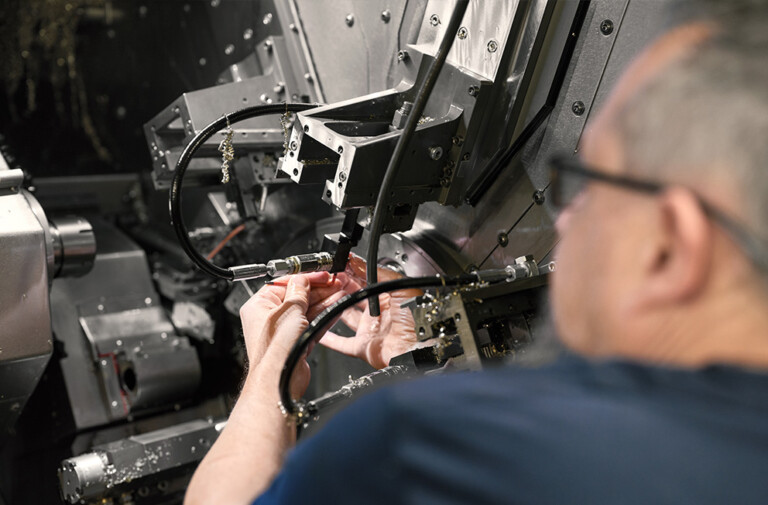
Set-up costs are generally incurred each time a machine is prepared for a production batch: fitting tools, setting process parameters, and producing and measuring initial samples. For a batch of 50,000 parts, these costs are spread across many units; for 500 parts, they account for a much larger share of the unit price.
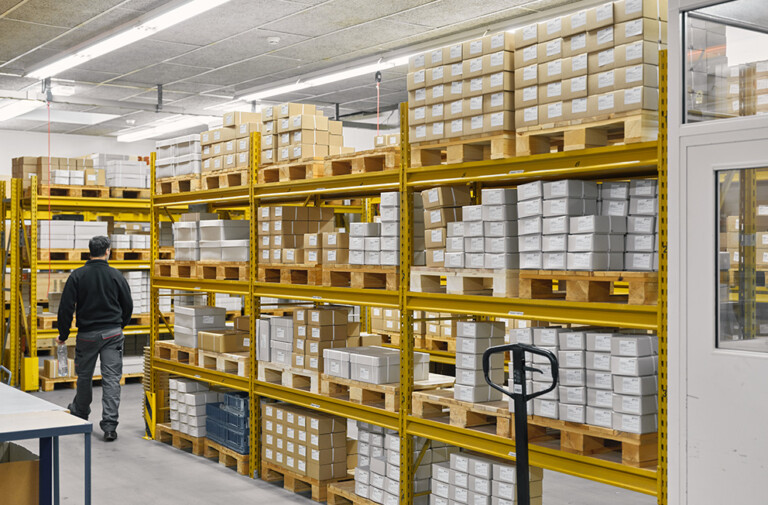
Even with an identical drawing, unit prices can vary with production batch size. The order quantity and delivery call-offs do not necessarily have to match the most economical production batch size. Delivery frequency, stockholding and packaging requirements also affect total costs. Coordinating batch sizes and delivery schedules can therefore be worthwhile.
Further reading: What buyers should consider when selecting a supplier
4. Raw material
Material prices and machinability vary according to alloy, specification and market conditions. Material utilisation, availability and tool wear also affect costs. It is therefore worth checking whether the specified material is essential to the component’s function or whether suitable alternatives are available.
Early technical discussions between the customer and manufacturing partner can help identify suitable alternative materials and opportunities to reduce costs without compromising functional requirements.
Further reading: Lead-free materials for precision turned parts — what the change really involves
5. Tolerances
Tight tolerances can increase the work involved in process control, inspection and, where necessary, secondary machining. The actual cost depends on geometry, material, process capability and production volume. Requirements that are not essential to the component’s function should therefore be reviewed at the design stage.
6. Process maturity and tooling costs
A manufacturing partner with experience of similar components can draw on proven tooling strategies, documented process parameters and established manufacturing expertise. This can help stabilise the production ramp-up and avoid unnecessary work. The extent of this advantage depends on the individual project.
7. Quality assurance and process reliability
Quality assurance has a cost, but unreliable processes can prove far more expensive. Documented manufacturing processes, appropriate inspection methods and systematic monitoring of quality throughout production help detect deviations early and maintain consistent component quality. A comparison based solely on unit price often overlooks additional incoming inspections, quality complaints, rework or production stoppages. It is therefore also essential to consider how reliably the required quality can be maintained throughout the production run.
Conclusion: The manufacturing approach matters as much as the unit price
Differences between quotations can reflect manufacturing methods, technical feasibility and process reliability. A lower price may result from a particularly cost-effective approach; a higher price may reflect additional services or different underlying conditions. Unit price alone is not a reliable guide to the quality of a quotation.
Looking at batch size, set-up requirements, material, inspection arrangements and delivery terms makes it easier to compare quotations meaningfully. Early technical discussions with the manufacturing partner can also reveal opportunities to reduce costs without changing the component’s functional requirements.
If you have questions about a specific quotation or the factors affecting the cost of your component, please get in touch.
Frequently Asked Questions (FAQ)
Why might the same supplier quote two different prices for the same drawing?
The assumptions behind the quotation may have changed — for example, the batch size, material prices, capacity utilisation, manufacturing method or one-off costs. Even if the drawing is unchanged, it is worth asking which assumptions the price is based on.
Can a different batch size reduce the unit price?
Often, yes. Where set-up costs account for a large proportion of the total, increasing the batch size reduces the unit price. However, holding more stock also ties up more working capital. The optimum batch size balances unit price against stockholding costs.
Who are Häni + Co. AG?
Häni + Co. AG is a Swiss family business based in Arch in the canton of Berne. Founded in 1939, the company has manufactured custom precision turned parts for demanding industrial applications for over 80 years. Its capabilities encompass conventional and CNC-controlled single-spindle automatics, multi-spindle machines and rotary transfer machines, together with in-house finishing operations including centreless grinding, honing, vibratory finishing and roller burnishing. Häni + Co. AG holds certifications to ISO 9001, ISO 14001, ISO 13485 and IATF 16949, and supplies customers in building services, medical technology, interconnect technology, sensor technology, robotics and automotive. Diameter range: Ø 1 to 65 mm.
Which sectors does Häni + Co. AG supply?
Building services, medical technology, interconnect technology, sensor technology, robotics, fluid technology and automotive. Typical components include shafts, axles, bushings, pinions, valve spindles, contact pins and connector elements. Swiss Precision since 1939.